
Describe the discomfort before changing the controls
Start with the room, the time and what you notice. “The bedroom is too warm by bedtime” is more useful than “the heat pump is inefficient”. Record the temperature you see, the setting you expected and whether the pattern repeats. Include changes you have already tried.
A short diary helps prevent circular troubleshooting. If several people adjust thermostats and schedules, note those changes too. We want to understand the system’s actual behaviour before proposing another instruction that might compete with the existing controls.
Heat pumps deserve their own control discussion
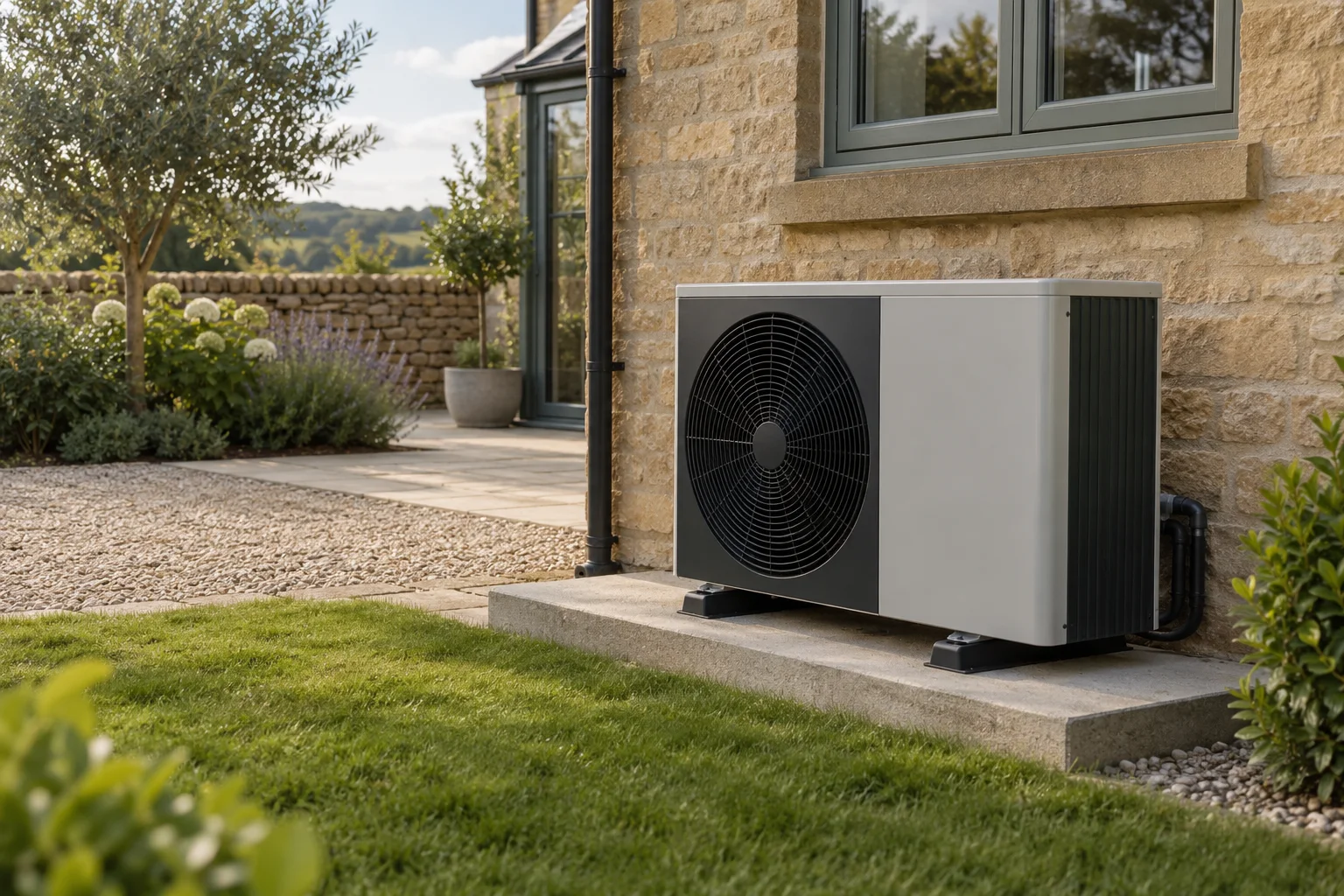
Energy Saving Trust explains that air-source heat pumps transfer heat into the home and that their performance and running costs depend on the system and how it is used. A controls review should therefore consider the installed equipment and household needs, rather than copy settings from another property.
We do not publish a universal flow temperature, heating curve or hot-water schedule. A setting that makes sense in one installation may be unsuitable in another. Manufacturer guidance and the installer’s design remain important when considering changes.
Supporting guidance: Energy Saving Trust: air-source heat pumps
Map who is asking for heat
Identify the main controller, room thermostats, zone controls and any third-party schedules. For underfloor heating, note which thermostat relates to which space if you know. Accessible controller photos and existing diagrams are useful; there is no need to remove covers or open equipment.
The question is whether the household’s instructions are clear and consistent. For example, one interface may show the desired room temperature while another controls the allowed schedule. Establishing these roles can make the system easier to use even when no hardware changes are needed.
Know when the issue belongs elsewhere
An error code, leak, suspected mechanical fault or concern about the installation needs the relevant heating specialist. Our focused review covers controls, schedules, available data and integration opportunities. It is not a service visit, heat-loss calculation or certification.
The written findings should distinguish what we observed from what still needs investigation. If the evidence points towards an installer question, you should leave with a clear description of the symptom and useful records to share, rather than an unsupported diagnosis.
Make the next step small enough to assess
A useful recommendation identifies one change or investigation, the expected effect and how you will check it. If more monitoring is needed first, agree what information would be useful and for how long. Avoid changing several unrelated settings and then trying to infer which one mattered.
A free introductory call can establish whether your concern fits a focused heating review. Tell us the heat-pump and controller models if you have them, but start with what the home feels like and what you want to improve.
APPLY THIS TO YOUR HOME
What would you like to make easier?
A free 15-minute call with Miles helps establish whether a review or integration project is the right next step.